
Most people wash their car every week, but have not touched their engine bay in years. The exterior shines, yet the area under the hood quietly collects dust, grease, and road debris. Over time, this buildup affects how components function. Dirt can block airflow, grime can trap heat, and oily residue can degrade belts and hoses. A quality engine bay cleaner breaks down that buildup before it becomes a real problem, keeping everything under the hood running as clean as it looks on the outside.
Furthermore, a neglected engine compartment often hides small leaks or worn parts. Regular cleaning car engine bay areas helps detect issues early and keeps components operating efficiently. A clean engine bay also improves resale value and makes routine maintenance easier.
However, many drivers hesitate to try cleaning an engine bay themselves. They worry about damaging sensors, soaking electrical connections, or harming rubber and plastic components. Those concerns are valid. The wrong product or technique can create problems.
Therefore, choosing the right engine bay cleaner and following proper cleaning steps matters. This guide ranks the best products available today. By the end, you will know which engine bay degreaser fits your situation and how to clean safely.
What to Look for in an Engine Bay Cleaner
Selecting the right engine bay cleaner requires more than grabbing the first spray bottle on the shelf. Modern vehicles contain electronics, plastic housings, rubber hoses, and aluminum parts. Therefore, a product must clean effectively without damaging sensitive components.
Key Buying Factors
| Factor | Why It Matters |
| Formula Type | Determines strength and safety |
| Surface Compatibility | Prevents damage to plastics and rubber |
| Rinse Requirement | Impacts ease of use |
| Eco-Friendly Ingredients | Reduces environmental impact |
| Dilution Capability | Improves value and versatility |
| Dwell Time | Determines how long the product works before rinsing |
Formula Type
There are two main categories of cleaners. Solvent-based formulas remove heavy oil and grease quickly. However, they can be aggressive. Water-based formulas act as a safer all purpose cleaner for engine bay surfaces. Additionally, they reduce the risk of damaging plastic and painted components.
Surface Safety
An effective engine degreaser must remain safe for rubber hoses, plastic covers, wiring insulation, and painted metal. Many modern engines rely heavily on these materials. Therefore, compatibility becomes essential.
Ease of Use
Some products require scrubbing and rinsing. Others allow a spray-and-rinse method. Beginners often prefer no-scrub formulas because they reduce the risk of damaging components.
Eco-Friendliness
Biodegradable cleaners are increasingly popular. They break down safely and produce fewer environmental concerns. Furthermore, they often smell better and feel safer to use.
Dilution Flexibility
Concentrated products deliver better long-term value. A strong good degreaser for engines can be diluted for light cleaning or used full strength for heavy grime.
Choosing the right cleaner simplifies cleaning car engine bay areas and protects sensitive parts.
The Top 5 Engine Bay Cleaners of 2026
#1 Chemical Guys Signature Series Orange Degreaser
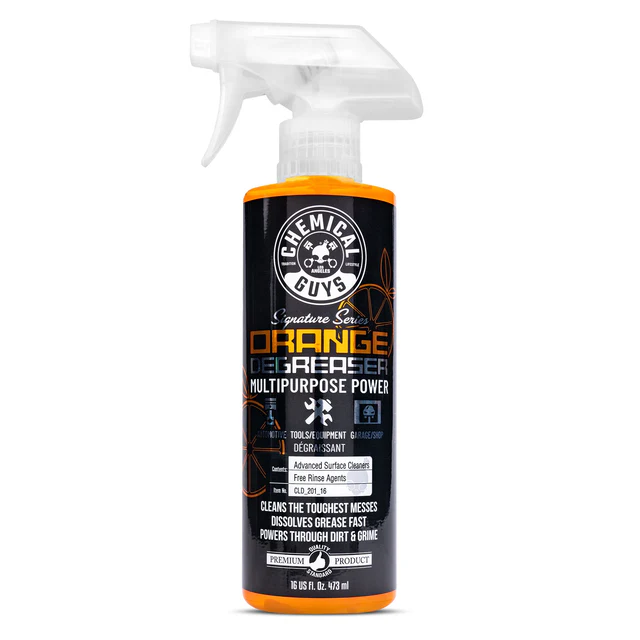
Best Overall / Best Value
| Rating | Best For | Price Range | Format |
| 9.5/10 | Versatile cleaning | $10–$15 | Concentrate |
Chemical Guys Orange Degreaser ranks among the most popular engine bay cleaner products available. The citrus-based formula dissolves grease quickly while remaining biodegradable. Additionally, it offers impressive versatility.
This cleaner works well on engines, wheel wells, tools, and garage floors. Furthermore, its dilution ratio allows users to adjust strength depending on the level of contamination. Light dilution works for routine cleaning an engine bay, while stronger mixes remove stubborn grease.
Pros
- Highly concentrated formula
- Citrus-based and biodegradable
- Excellent value per use
- Multi-purpose cleaning capability
Cons
- Extremely dirty engines may require agitation
How to Use
Spray the diluted solution onto the engine bay. Allow the product to dwell for several minutes. Then agitate stubborn grime using a soft detailing brush. Rinse gently with water.
Best For
Drivers who want a versatile engine bay degreaser that balances cleaning power with safety.
#2 SONAX Engine Cleaner & Degreaser
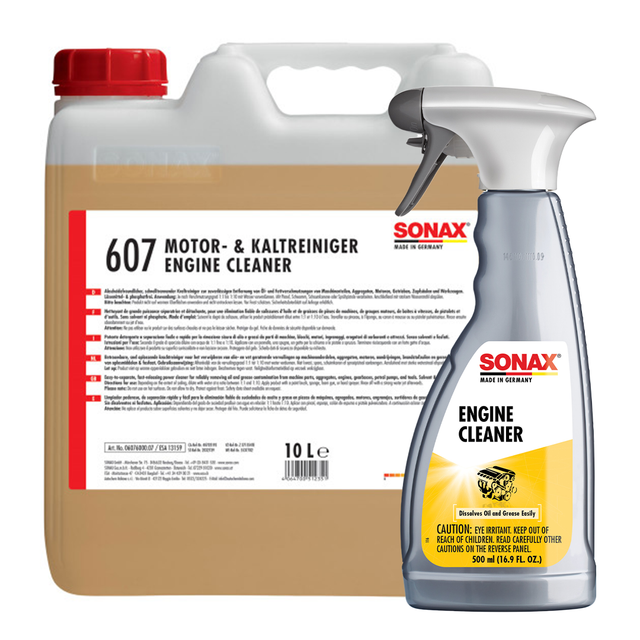
Best for Modern Engines
| Rating | Best For | Price Range | Format |
| 9.3/10 | Modern vehicles | $15–$20 | Spray |
SONAX Engine Cleaner stands out as one of the safest formulas available. Its phosphate-free and solvent-free composition reduces the risk of damaging components. Additionally, the spray-on formula makes it extremely easy to use.
This cleaner targets oil residue, road grime, and dust without harming plastics or rubber parts. Therefore, it suits modern engines filled with sensors and electronic modules.
Another advantage is its no-scrub approach. Users simply spray the engine bay cleaner, allow it to sit for several minutes, and rinse gently.
Pros
- Safe formula for modern engines
- No scrubbing required
- Environmentally friendly ingredients
- Excellent cleaning ability
Cons
- Higher price than many competitors
- Not recommended for painted surfaces
How to Use
Spray evenly across the engine. Let the product sit for 3–5 minutes. Rinse thoroughly with low-pressure water.
Best For
Drivers who prioritize safety when cleaning car engine bay components filled with electronics.
#3 Gunk Foamy Engine Brite
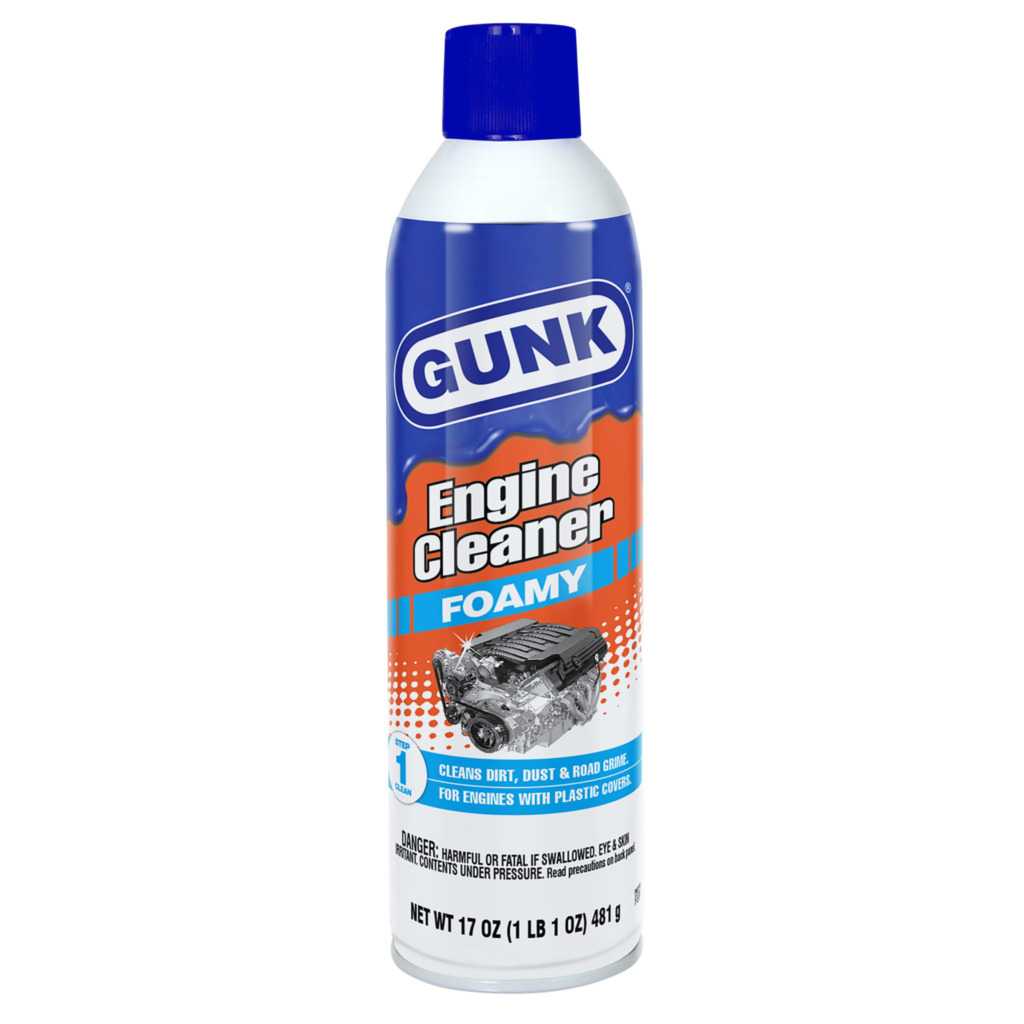
Best for Beginners
| Rating | Best For | Price Range | Format |
| 8.8/10 | First-time users | $7–$10 | Foam spray |
Gunk Foamy Engine Brite has existed for decades. Many mechanics and DIY enthusiasts trust it for simple engine bay cleaning tasks. Its foam formula clings to surfaces and loosens grease.
Additionally, the foam expands into tight spaces around hoses and engine components. This allows the engine degreaser to reach areas that are difficult to scrub.
The product works especially well for moderately dirty engines. However, extremely greasy engines may require multiple applications.
Pros
- Easy to use spray can
- Foam reaches tight spaces
- Affordable price
- Widely available in stores
Cons
- Heavy grime may require repeated cleaning
- Thorough rinsing needed to avoid residue
How to Use
Spray foam across the engine bay. Allow the foam to break down grease for several minutes. Rinse gently with water.
Best For
Drivers attempting cleaning an engine bay for the first time.
#4 Simple Green Industrial Cleaner & Degreaser
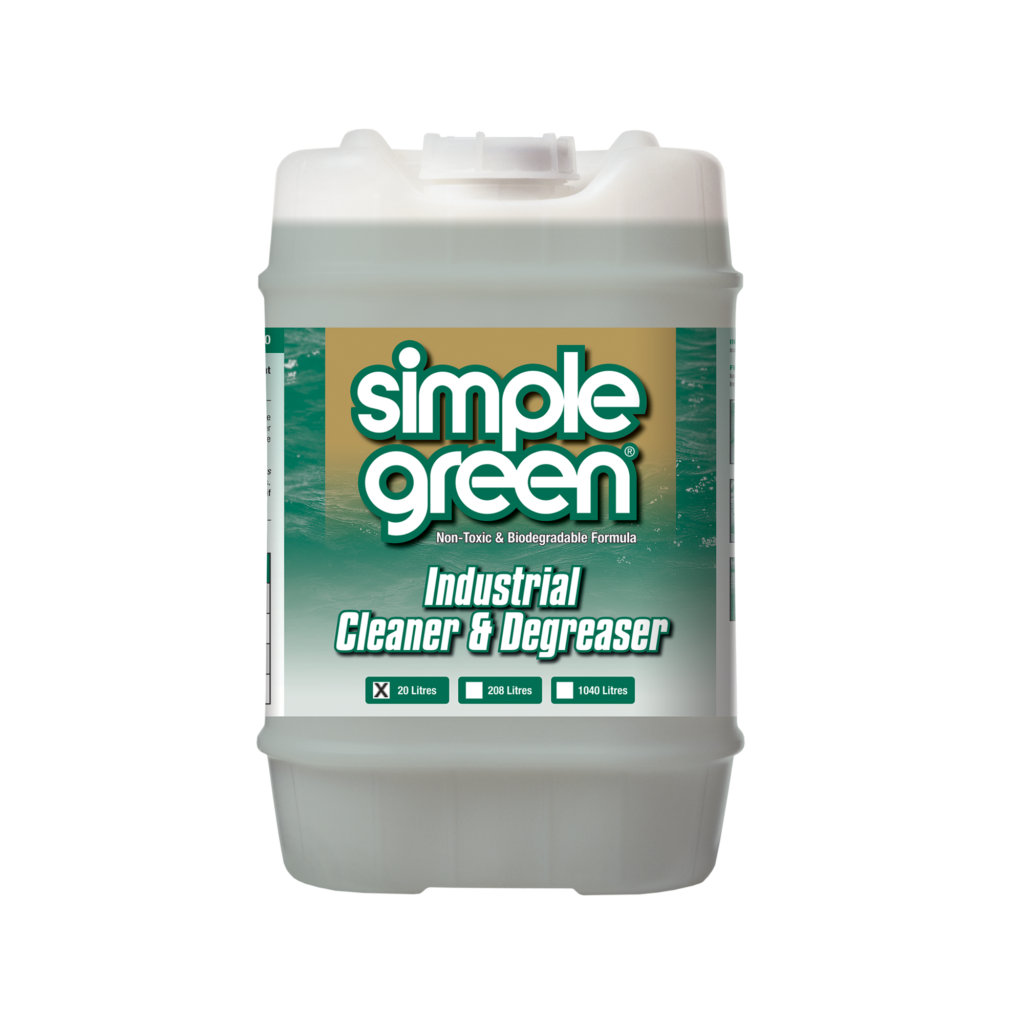
Best Concentrated Formula
| Rating | Best For | Price Range | Format |
| 9.1/10 | Multi-purpose cleaning | $10–$15 | Concentrate |
Simple Green remains one of the most widely used cleaning products in automotive garages. Its concentrated formula works well as an all purpose cleaner for engine bay surfaces.
The product removes oil, grease, and road grime effectively. Additionally, it remains biodegradable and environmentally responsible.
Many automotive enthusiasts appreciate its versatility. The cleaner works on engines, tools, garage floors, and even interior surfaces.
However, users must dilute the solution properly. The Pro HD version is recommended because it remains safe for aluminum surfaces.
Pros
- Highly concentrated formula
- Eco-friendly ingredients
- Multi-surface compatibility
- Cost-effective long-term use
Cons
- Requires proper dilution
- Strong scent for some users
How to Use
Dilute according to instructions. Spray onto engine surfaces. Allow dwell time before rinsing gently.
Best For
Drivers seeking a reliable good degreaser for engines that also works for many cleaning tasks.
#5 3D Grand Blast Heavy Duty Degreaser
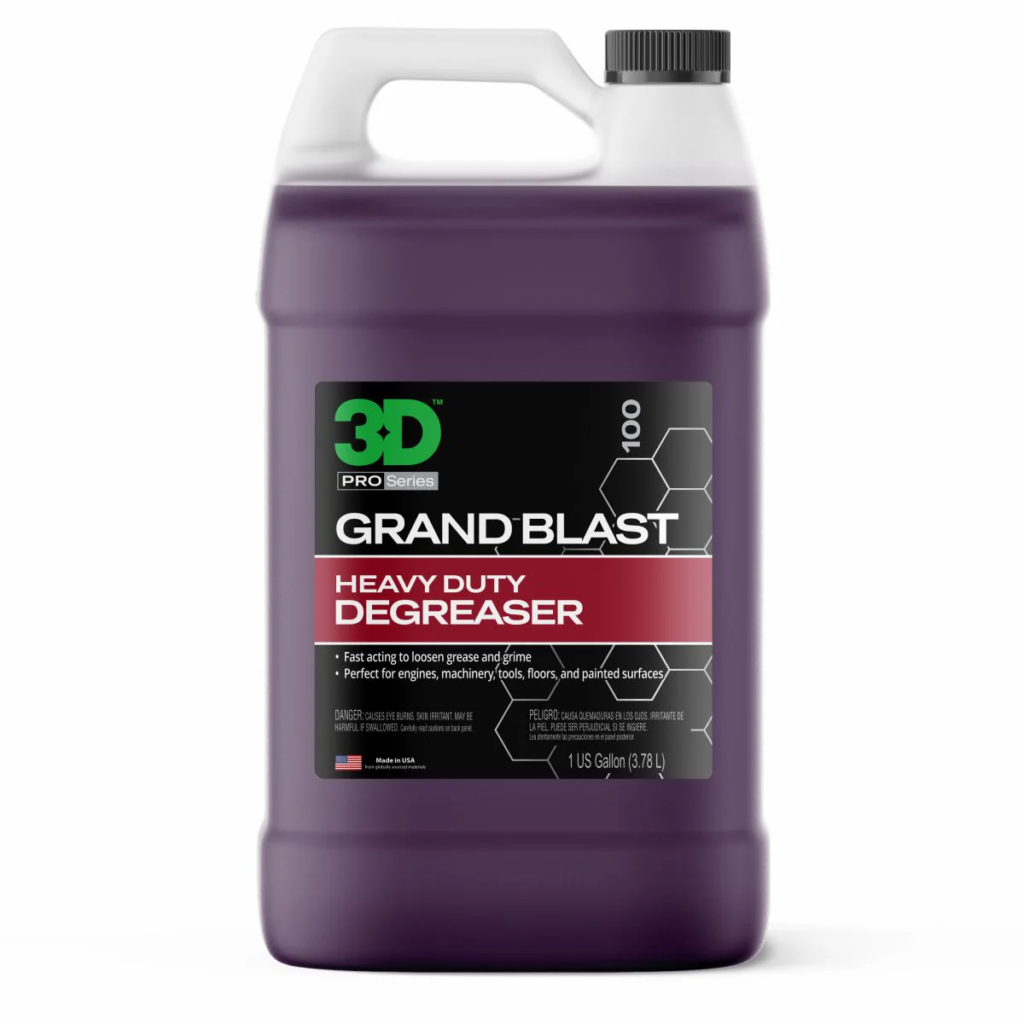
Best for Extremely Dirty Engines
| Rating | Best For | Price Range | Format |
| 9.0/10 | Heavy grease buildup | $20–$25 | Concentrate |
3D Grand Blast Degreaser targets extremely dirty engines. It dissolves thick oil, grease, and sludge quickly. Professional detailing shops frequently use it during deep cleaning services.
Furthermore, the formula works safely on metal, plastic, paint, and rubber surfaces. This versatility makes it suitable for engines, wheel wells, and undercarriage cleaning.
Because of its strength, this engine bay degreaser is most effective on neglected vehicles with years of grime.
Pros
- Very powerful cleaning ability
- Professional-grade formula
- Works on multiple automotive surfaces
Cons
- Stronger than necessary for light cleaning
- Higher cost compared to basic cleaners
How to Use
Dilute if needed. Spray heavily soiled areas. Allow the degreaser to break down grime before rinsing.
Best For
Drivers restoring a heavily contaminated engine bay.
Honorable Mentions
Several additional products perform well but did not make the main ranking.
WD-40 Specialist Foaming Engine Degreaser
A strong aerosol option that sprays long distances. It performs well on greasy surfaces and expands into tight engine spaces.
Purple Power Cleaner and Degreaser
Extremely affordable and powerful when diluted properly. Many automotive forums recommend it for heavy grease removal.
Adam’s Polishes All Purpose Cleaner
Popular among professional detailers. It works on interiors, exteriors, and engines. Therefore, it suits users who prefer a single product for multiple tasks.
These products remain excellent alternatives depending on budget and cleaning needs.
How to Use an Engine Bay Cleaner Safely
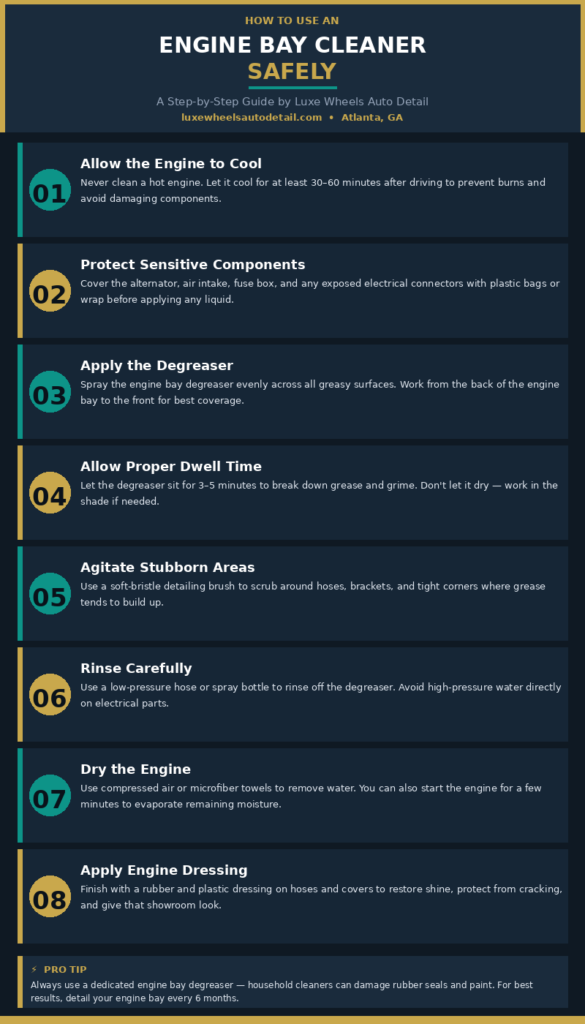
Proper technique matters as much as choosing the right engine bay cleaner. Using incorrect methods can damage electrical components or push water into sensitive areas. Therefore, follow a careful step-by-step process.
1. Allow the Engine to Cool
Never spray a hot engine. Heat causes cleaners to evaporate quickly and may damage components. Therefore, allow the engine to cool completely before starting.
2. Protect Sensitive Components
Cover exposed air intakes and battery terminals using plastic bags. Older vehicles may also require covering the distributor cap, ignition coil, and exposed wiring harnesses.
3. Apply the Degreaser
Spray the engine bay degreaser generously across surfaces. Focus on areas with visible oil or grease buildup.
4. Allow Proper Dwell Time
Let the cleaner sit for two to five minutes. This dwell period allows the engine degreaser to break down grime without excessive scrubbing.
5. Agitate Stubborn Areas
Use a soft detailing brush to loosen stubborn dirt. Gentle brushing works best for cleaning car engine bay surfaces without damaging plastics or wiring.
6. Rinse Carefully
Avoid high-pressure water. Instead, allow a gentle stream from a hose to wash away dirt and cleaner. High pressure can force water into connectors.
7. Dry the Engine
Use compressed air or a leaf blower to remove water from tight spaces. Afterwards, start the engine and let it idle briefly to evaporate remaining moisture.
8. Apply Engine Dressing
Finally, apply a protective dressing to rubber hoses and plastic covers. This step restores a clean appearance and protects materials from drying out.
Maintenance Tip
Regular light cleaning works better than occasional heavy scrubbing. Wiping down the engine during oil changes prevents grease buildup and simplifies future cleaning.
If you prefer professional help, searching engine bay cleaning near me or engine bay cleaning service near me can locate detailers who specialize in safe engine cleaning. Professional services often charge a moderate engine bay cleaning cost, depending on vehicle condition.
FAQs
Pressure washing is generally not recommended. High pressure can force water into electrical connectors and sensors. A gentle hose stream works much safer for cleaning an engine bay.
Yes. Modern engines contain sealed connectors designed to handle moisture. However, excessive water or pressure can still cause problems. Always protect sensitive components before cleaning.
Most drivers benefit from cleaning the engine compartment two to three times per year. Vehicles driven in dusty or harsh environments may require more frequent cleaning.
Quality cleaners designed for automotive use remain safe for rubber and plastic components. Always choose a dedicated engine bay cleaner rather than harsh household chemicals.
Engine cleaners typically target dust and light grime. Degreasers focus on heavy oil and grease removal. Many products combine both functions.
Yes. However, the Pro HD version works best because it remains safe for aluminum components.
Conclusion
Keeping your engine bay clean improves maintenance visibility, prevents grime buildup, and protects engine components. Fortunately, several products make the process easy.
Quick Recommendations
- Best Overall: Chemical Guys Orange Degreaser
- Best for Modern Engines: SONAX Engine Cleaner
- Best for Beginners: Gunk Foamy Engine Brite
- Best Budget Concentrate: Simple Green Industrial Cleaner
- Best for Heavy Grease: 3D Grand Blast Degreaser
If your engine has light dust, choose a mild cleaner. If grease covers the components, select a stronger engine bay degreaser.
Regularly cleaning car engine bay surfaces improves longevity and keeps vehicles looking well-maintained. With the right product and proper method, maintaining a clean engine compartment becomes simple and safe.

