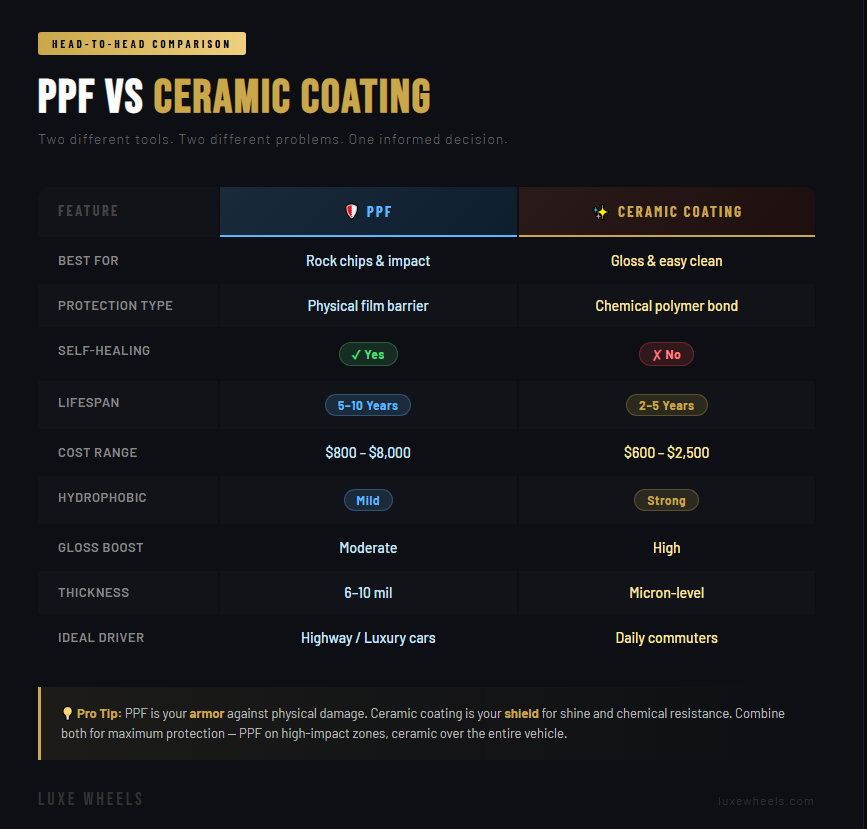
PPF vs Ceramic coating : Quick Summary
| PPF | Ceramic Coating | |
| Best For | Rock chips & physical impact | Gloss, shine & easy maintenance |
| Protection Type | Physical barrier (film) | Chemical bond (liquid polymer) |
| Self-Healing | Yes | No |
| Lifespan | 5–10 years | 2–5 years |
| Cost | $800–$8,000 | $600–$2,500 |
| Ideal Driver | Highway, luxury, exotic cars | Daily commuters, budget-conscious owners |
| Can Be Combined? | Yes — most recommended option | Yes — apply over PPF for best results |
Bottom line: In the PPF vs ceramic coating debate, each serves a different purpose. PPF acts as armor against physical damage like rock chips and scratches, while ceramic coating provides a glossy finish and strong chemical resistance. For maximum protection, many experts recommend combining both, apply PPF on high-impact zones and ceramic coating over the entire vehicle for durability, shine, and easier maintenance.
Your car’s paint faces constant exposure. Stones strike the surface. Additionally, UV rays fade clear coat over time. Road salt, bird droppings, and chemical fallout stain the finish. These factors slowly reduce gloss and resale value. Therefore, paint protection becomes essential for modern vehicle ownership.
Many drivers compare PPF vs ceramic coating before investing. Both solutions protect paint. However, they function differently. One creates a physical barrier. The other forms a chemical shield. Furthermore, graphene coating is a newer option. Understanding the real ppf vs ceramic coating differences helps you choose wisely. This guide explains performance, cost, durability, and long-term value so you can confidently decide between car ppf vs ceramic coating.
What Is PPF (Paint Protection Film)?
Paint Protection Film, commonly known as PPF, is a transparent polyurethane film. Installers apply it directly over painted panels. It acts as a sacrificial barrier. Therefore, it absorbs impact before the paint suffers damage.
PPF works by using elastic polymers. These materials stretch and absorb shock from debris. Additionally, modern films include self-healing technology. When exposed to heat, light scratches disappear. This feature keeps the surface smooth over time. Installers usually apply PPF on high-impact zones. These include the front bumper, hood, side mirrors, rocker panels, and door edges. Some owners choose full-body installation for maximum protection.
Manufacturers offer gloss and matte finishes. Gloss film enhances shine. Matte film preserves factory satin paint. Furthermore, premium films resist yellowing and staining. In the debate of car ppf vs ceramic coating, PPF clearly leads in physical impact protection and thickness.
What Is Ceramic Coating?
Ceramic coating is a liquid polymer solution. Professionals apply it by hand to clean paint. It chemically bonds with the clear coat. Therefore, it creates a semi-permanent protective layer.
Unlike PPF, ceramic coating does not add measurable thickness. Instead, it strengthens the paint’s surface hardness. Additionally, it creates strong hydrophobic behavior. Water beads and rolls off quickly. Dirt and grime struggle to attach. This reduces washing effort and lowers swirl risk.
Ceramic coatings also improve gloss. Paint looks deeper and more reflective. Most professional coatings last two to five years with proper care. Furthermore, premium multi-layer systems extend durability. According to IGL Coatings, combining PPF on high-impact areas with ceramic coating across the rest of the vehicle delivers both physical protection and a superior glossy finish. When comparing ppf vs ceramic coating, ceramic excels in chemical resistance and ease of maintenance. However, it does not stop rock chips. These ppf vs ceramic coating differences matter when evaluating real-world performance.
What Is Graphene Coating?
Graphene coating represents an evolution of ceramic technology. It incorporates graphene oxide into the formula. These particles claim to improve durability and heat dispersion. Therefore, many brands promote it as a superior option.
Like ceramic coating, graphene coatings bond chemically with paint. Additionally, they create hydrophobic protection and gloss enhancement. Supporters claim better resistance to water spotting. Some also claim improved longevity under extreme heat.
However, real-world results often resemble high-quality ceramic products. The effectiveness depends on formulation quality and installation skill. Graphene coating does not replace PPF in preventing impact damage. Instead, it competes with ceramic in surface protection. When choosing between graphene coating and traditional ceramic, focus on warranty and installer expertise rather than marketing language.
PPF vs Ceramic Coating: Key Differences
When comparingPPF vs ceramic coating, examine function first. Both protect paint. However, they solve different problems. As Metro Restyling, one of North America’s leading detailing product suppliers, explains, ceramic coating acts on surface maintenance and appearance, while PPF is a physical barrier that absorbs real impact, two fundamentally different tools for two different problems.
| Feature | PPF | Ceramic Coating |
| Rock Chip Protection | Excellent | None |
| Scratch Resistance | High impact resistance | Minor swirl resistance |
| Self-Healing | Yes (heat-activated) | No |
| Gloss | Moderate | High |
| Hydrophobic Effect | Mild | Strong |
| Thickness | 6–10 mil | Micron-level |
| Lifespan | 5–10 years | 2–5 years |
| Maintenance | Standard washing | Easier washing |
| Removal | Peelable film | Requires polishing |
| Cost | Higher | Moderate |
PPF acts as armor. Ceramic coating acts as sealant. Therefore, ceramic coating vs ppf which is better depends entirely on your expectations. If you want chip prevention, choose film. If you want shine and easier cleaning, choose coating.
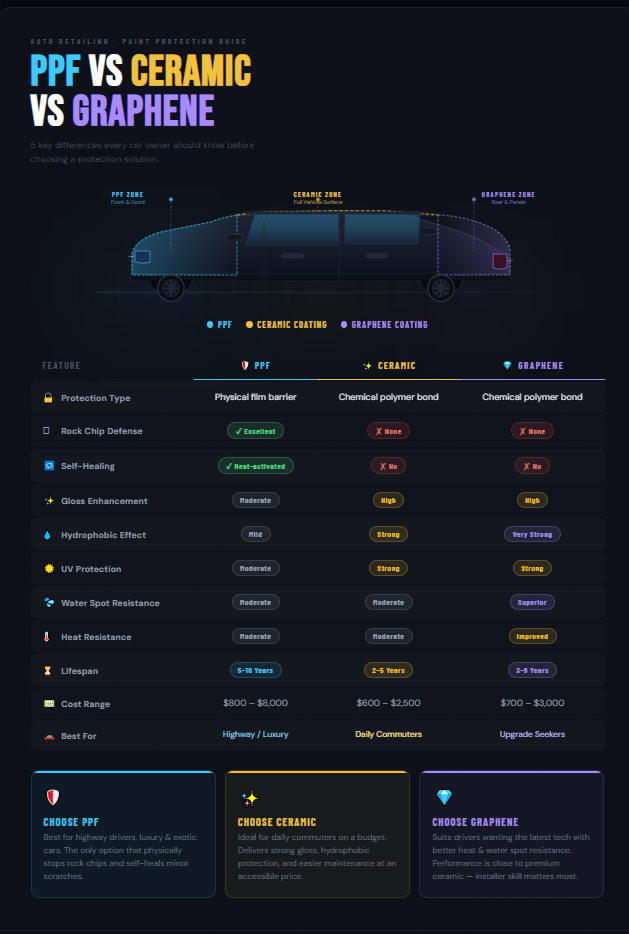
PPF vs Ceramic vs Graphene Coating (Direct Comparison)
Daily drivers benefit from ceramic coating. It simplifies maintenance and improves gloss. Additionally, it offers affordable entry protection.
Luxury vehicles often require PPF in high-impact zones. Owners protect expensive paint finishes from chips and scratches. Furthermore, combining PPF with ceramic coating enhances both defense and shine.
High-speed highway drivers should prioritize PPF. Road debris increases at higher speeds. Film absorbs these impacts effectively. Budget-conscious owners may prefer ceramic coating. It provides strong chemical resistance without high installation costs.
Graphene coating suits drivers seeking upgraded branding and potential heat resistance. However, performance often aligns closely with ceramic systems. In the broader conversation of ppf vs ceramic coating, usage patterns matter more than marketing claims.
Paint Protection Film: Pros and Cons
PPF delivers superior impact protection. It blocks rock chips and road debris effectively. Additionally, self-healing technology removes light scratches under heat. It preserves original paint and supports resale value. Full-body PPF provides comprehensive coverage.
However, PPF requires professional installation. Improper alignment may show edges or lifting. Additionally, high-quality film costs more than coating systems. Some lower-grade films may discolor over time.
Maintenance remains straightforward. Owners wash normally. However, heavy contamination may require careful cleaning to avoid lifting edges. In analyzing ppf vs ceramic coating differences, PPF clearly dominates physical defense. Yet, it demands higher upfront investment and skilled labor.
Ceramic Coating: Pros and Cons
Ceramic coating enhances visual depth and clarity. Paint reflects light more intensely. Additionally, hydrophobic behavior reduces water spotting. Dirt releases easily during washing. This reduces swirl formation.
Ceramic coating also protects against UV rays and chemical staining. It reduces oxidation in harsh climates. Furthermore, maintenance becomes simpler compared to untreated paint.
However, ceramic coating does not prevent rock chips. It also cannot self-heal deep scratches. Improper washing still causes damage. Additionally, low-cost DIY products may underperform.
In discussions around ceramic coating vs ppf which is better, ceramic excels in aesthetics and maintenance. Yet, it cannot substitute for physical film when impact risk remains high.
PPF vs Ceramic Coating Cost
Cost strongly influences decision-making. Therefore, understanding ceramic coating vs ppf price structures helps clarify value.
Partial front PPF installation typically ranges from $800 to $2,000. Full-body PPF ranges from $4,000 to $8,000 depending on vehicle size and film quality. Premium self-healing or matte films increase pricing further.
Professional ceramic coating usually starts around $600. High-end multi-layer systems range between $1,200 and $2,500. Graphene coatings often cost slightly more due to branding and warranty positioning.
Long-term value depends on damage prevention. PPF may prevent repaint costs from chips. Ceramic coating reduces detailing expenses over time.When evaluating ppf vs ceramic coating, consider repair savings and resale impact rather than upfront cost alone.
For a deeper breakdown of what professional ceramic coating actually costs in 2026, read our guide on Ceramic Coating Cost: What You Should Expect to Pay in 2026.
Which One Should You Choose?
Start by considering your available budget. If the goal is to keep the initial investment relatively low while still improving the vehicle’s appearance and protection, ceramic coating is often a practical option. It creates a durable protective layer over the paint and significantly enhances gloss, making the car look newer and easier to maintain. Many owners choose ceramic coating primarily for its shine and hydrophobic properties, which help repel water, dirt, and minor contaminants.
Driving habits should also influence the decision. Vehicles frequently driven on highways face higher risks of stone chips and debris impact. In such cases, paint protection film (PPF) offers superior physical protection because it absorbs small impacts that would otherwise damage the paint. On the other hand, vehicles mainly used for city commuting may benefit more from ceramic coating because it simplifies cleaning and maintains a polished finish.
Environmental conditions are another factor. Hot climates increase ultraviolet exposure, which gradually oxidizes paint. Ceramic coatings help reduce UV damage, while PPF performs better against gravel or road debris.
Vehicle value and ownership plans also matter. Luxury or exotic cars often justify full-body PPF because preserving factory paint maintains resale value. For daily drivers, a balanced approach is common: partial PPF on high-impact areas combined with ceramic coating across the entire vehicle for enhanced shine and protection. If you’re ready to take the next step, explore our professional Ceramic Coating Service in Atlanta to see how Luxe Wheels can protect and enhance your vehicle’s finish.
FAQ
PPF is a physical film that protects against rock chips and scratches. Ceramic coating bonds to your paint and repels water, UV, and chemicals. PPF protects from physical damage; ceramic coating enhances gloss and easier cleaning.
Partial front: $500–$900. Full front end: $1,200–$2,000. Full vehicle: $3,500–$7,000+.
Yes, especially if you drive highways, own a new or luxury car, or care about resale value. It’s the best way to keep paint chip-free long term.
Yes. Use a mild polish and a dual-action polisher. Try heat first if your film is self-healing — light scratches may disappear on their own.
Yes, but a ceramic or graphene coating over the film is a much better option — it lasts years instead of weeks.
It repels water, resists UV fading, fights bird droppings and chemicals, and keeps your car looking glossy with less effort. Graphene coatings are an upgraded version with even better durability and water repellency.
If you are searching for ceramic coating near you in Miami, Luxe Wheels Auto Detail provides professional ceramic coating services at:
10751 Southwest 47th Street, Miami, FL 33165
Our ceramic coatings protect your vehicle’s paint from UV damage, chemical stains, and environmental contaminants while enhancing gloss and long-term durability.
Conclusion
Modern vehicles constantly face environmental exposure such as road debris, UV radiation, chemical contaminants, and weather-related wear. Over time, these factors gradually degrade the paint surface and reduce the vehicle’s visual appeal. Paint protection technologies help minimize this damage and maintain the original finish. Understanding the real differences between PPF and ceramic coating is important because many vehicle owners expect the same benefits from both, which often leads to confusion.
Paint Protection Film (PPF) functions as a physical barrier placed directly over the paint surface. It absorbs impacts from stones, gravel, and other road debris, helping prevent chips and scratches. Ceramic coating, on the other hand, focuses more on surface enhancement and maintenance. It adds a hydrophobic layer that improves gloss, repels water, and makes cleaning significantly easier.
Graphene coatings have also emerged as an alternative chemical protection layer, offering improved resistance to heat and contaminants.
When evaluating PPF versus ceramic coating, the decision should depend on driving conditions, exposure risks, and long-term ownership goals. Many car owners combine PPF on high-impact zones with ceramic coating across the remaining panels to achieve both protection and aesthetic enhancement.