If you park outside in Atlanta, your car’s paint is taking a beating every single day. Sun faded car paint oxidation is something we see constantly here. Drivers bring their cars in thinking they just need a wash, and we have to break the news that what they’re dealing with is a lot deeper than surface dirt.
Atlanta summers are no joke. The heat, the humidity, the UV rays bouncing off the pavement it all adds up fast. Most people don’t catch it early because it sneaks up on you. One day your car looks fine, and then suddenly the hood looks chalky, the roof looks faded, and the color just looks off. That’s oxidation. And the longer you leave it, the harder and more expensive it is to fix. This guide is going to walk you through exactly what’s happening to your paint, why Atlanta makes it worse, and what you can actually do about it.
What Is Car Paint Oxidation?
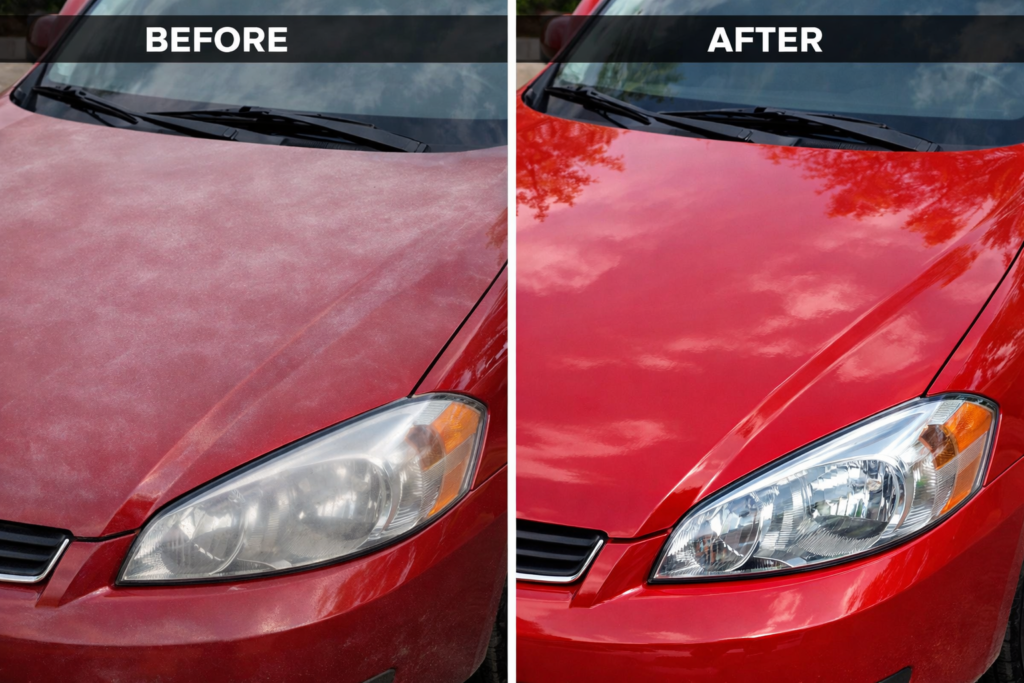
Car paint oxidation occurs when oxygen reacts with the surface of your vehicle’s paint. This chemical reaction accelerates when paint is exposed to heat, sunlight, and air for extended periods. Furthermore, UV radiation breaks down the clear coat, allowing oxygen to penetrate deeper layers. Once this happens, oxidation becomes unavoidable without intervention.
Additionally, oxidation strips essential oils from the paint. These oils keep the surface smooth, flexible, and glossy. When they disappear, the paint dries out and loses elasticity. This causes the surface to look faded and lifeless. A dull paint on car panels no longer reflects light evenly. Instead, it scatters light, creating a chalky or cloudy appearance. Over time, oxidation spreads across multiple panels, especially those facing direct sunlight. Without correction, the damage deepens and becomes permanent.
Why Atlanta’s Heat & Sun Accelerate Paint Damage
Atlanta’s climate is particularly harsh on vehicle finishes. Long summers, high temperatures, and consistent sun exposure place constant stress on automotive paint. Furthermore, vehicles parked outdoors absorb radiant heat from asphalt and concrete surfaces. This increases surface temperatures far beyond air temperature.
Additionally, Atlanta experiences strong UV radiation throughout most of the year. Even on cooler or cloudy days, UV rays continue to damage exposed paint. Sun damage car paint issues are therefore common across all vehicle types. Car sun damage does not occur suddenly. Instead, it builds gradually through daily exposure. Over months and years, this constant stress leads to fading, surface roughness, and structural paint failure. Without protection, paint damage becomes inevitable.
UV Rays and Clear Coat Breakdown
UV rays attack the clear coat first. This transparent layer exists to protect the paint beneath from environmental damage. Furthermore, prolonged UV exposure breaks down chemical bonds inside the clear coat. This weakens its structure and reduces its ability to block oxygen and moisture.
Additionally, heat softens the clear coat, making it easier for UV rays to penetrate deeper. Vehicles without UV protective paint deteriorate significantly faster. Clear coat breakdown often appears as hazing, peeling, or uneven gloss. Once the clear coat fails, the underlying paint becomes exposed. At this stage, car paint damage accelerates rapidly, spreading across panels exposed to sunlight.
Heat Cycles and Surface Stress
Atlanta vehicles experience daily heating and cooling cycles. Paint expands during hot afternoons and contracts at night as temperatures drop. Furthermore, this repeated movement creates internal stress within the paint layers.
Additionally, constant expansion and contraction form microscopic cracks over time. These cracks allow oxygen, moisture, and contaminants to enter deeper layers. As a result, the paint loses flexibility and cohesion. Long-term exposure leads to blistering, peeling, and uneven fading. Heat cycles may not be visible, but they are one of the most destructive forces affecting paint longevity in hot climates.
Signs Your Car Paint Is Fading or Oxidizing
Paint oxidation rarely starts with dramatic symptoms. Instead, subtle changes appear gradually. Car paint is fading when the surface loses clarity, depth, and reflectivity. Furthermore, early signs often appear on areas most exposed to sunlight, such as the hood, roof, and trunk.
Key warning signs include:
- Reduced gloss and mirror-like reflection
- Uneven color or patchy fading
- Rough or chalky texture
Additionally, faded car paint often feels dry or gritty instead of smooth. Faded auto paint may look significantly lighter under direct sunlight. A dull paint on car panels means oxidation has already started. Identifying these signs early allows corrective detailing rather than expensive repainting.
How Long Does Car Paint Last in Hot Weather?
Paint lifespan depends on application quality, exposure, and maintenance habits. Factory paint generally lasts longer because it cures under controlled conditions. However, how long does spray paint last on a vehicle exposed to Atlanta heat? Without protection, resprayed surfaces degrade faster.
Furthermore, outdoor parking dramatically reduces paint lifespan. Vehicles parked in garages avoid prolonged UV exposure and heat buildup. Additionally, Atlanta’s humidity traps heat against the paint surface, accelerating oxidation. In harsh conditions, visible fading may appear within three to five years. With proper care and protection, paint can remain vibrant for ten to fifteen years, even in hot climates.
How Sun Damage Permanently Affects Car Paint
Sun damage on car surfaces progresses in stages. Initially, UV rays degrade only the clear coat. Furthermore, this early stage is usually reversible with professional paint correction. However, prolonged exposure allows UV radiation to penetrate deeper.
Once UV rays damage the color layer itself, restoration becomes limited. Pigment molecules break down, causing permanent discoloration. Clear coat failure results in peeling and haze. Paint layer damage causes uneven fading that polishing cannot fix. At this stage, car sun damage repair often requires repainting. Preventive protection stops damage before it reaches this irreversible point.
How to Protect Car Paint From Fading
Effective protection requires consistency and proper techniques. Learning how to protect car paint from fading helps vehicle owners slow oxidation significantly. Furthermore, protective layers reduce heat absorption and block UV penetration.
Key protection strategies include:
- Regular washing and maintenance
- Application of protective coatings
- Strategic parking and shade use
Additionally, UV protective paint products create a physical barrier against sunlight. When you protect car paint early, you preserve gloss, color depth, and surface integrity. Preventive care always costs less than corrective repairs.
Regular Washing & Decontamination
Contaminants bond quickly to hot paint surfaces. Furthermore, dust, minerals, and pollutants trap heat and accelerate oxidation. Regular washing removes surface contaminants before they harden.
Additionally, professional decontamination removes bonded particles that normal washing cannot. Clean paint reflects sunlight more efficiently and stays cooler. A full interior detailing and sanitization service paired with exterior protection keeps your entire vehicle in top condition year round.
Wax vs Paint Sealants vs Ceramic Coating
Not all protection methods provide equal durability. Wax enhances shine but offers limited heat resistance. Paint sealants last longer and block more UV radiation. Ceramic coatings offer the strongest protection.
| Protection Type | Longevity | Heat Resistance |
| Wax | 1–2 months | Low |
| Sealant | 4–6 months | Medium |
| Ceramic Coating | 1–3 years | High |
Ceramic coatings provide the most reliable protection for Atlanta’s climate. moreover the Professional Detailing Institute recommends ceramic coatings as the gold standard for vehicles in high UV exposure climates.
How Professional Detailing Helps Restore Car Paint
Professional detailing addresses oxidation safely and effectively. Restore car paint using controlled correction rather than aggressive sanding. Furthermore, trained professionals measure paint thickness before treatment.
Detailing improves appearance and durability simultaneously. Additionally, professional tools ensure even correction across all panels. This process revives gloss, enhances color depth, and slows future oxidation. In hot climates like Atlanta, detailing plays a crucial preventive role.
Paint Correction & Polishing
Paint correction removes oxidized layers using precision polishing. Furthermore, it levels the surface and restores clarity. Swirls, haze, and oxidation diminish gradually.
Polishing improves reflectivity and color richness. However, it must be done carefully to preserve paint thickness. When performed correctly, paint correction dramatically improves appearance while maintaining long-term durability.
Ceramic Coating for Heat & UV Protection
Ceramic coatings chemically bond to paint surfaces. Furthermore, they form a durable barrier that resists UV rays, heat, and oxidation. This makes them ideal for Atlanta’s environment.
Additionally, ceramic coatings repel water, dirt, and contaminants. This reduces maintenance and keeps paint cooler. Long-term UV resistance preserves finish quality for years. If you’re serious about protecting your paint from Atlanta’s heat, our ceramic coating service in Atlanta is the strongest protection we offer.
Can Sun-Damaged Paint Be Fully Repaired?
Car sun damage repair depends on severity. Light oxidation and surface fading respond well to professional detailing. Furthermore, early correction restores most visual defects.
However, severe damage that penetrates the paint layer cannot be fully repaired. At this stage, repainting becomes necessary. Understanding damage depth helps owners choose realistic and cost-effective solutions.
Why Atlanta Drivers Should Address Paint Oxidation Early
Early action saves significant money. Detailing costs far less than repainting. Furthermore, factory paint maintains higher resale value than repainted panels.
Additionally, oxidized vehicles appear neglected regardless of mechanical condition. Buyers often associate faded paint with poor maintenance. Addressing oxidation early protects appearance, resale value, and ownership satisfaction for Atlanta drivers.
FAQs
Removing car paint oxidation depends on how severe it is. For light oxidizing paint on car, you can use a polish or rubbing compound to restore shine. For moderate car oxidation, a clay bar followed by machine polishing works best. In severe cases, a professional detailer may need to wet sand and apply a faded paint restorer or even repaint the panel. Always finish with wax or sealant to protect against future car sun damage.
Car oxidation happens when your car’s paint is exposed to oxygen and UV rays over time. The biggest cause is prolonged exposure to sunlight, leading to car sun damage. Other factors include pollution, acid rain, road salt, and lack of maintenance. When the clear coat breaks down, it results in dull, chalky, or faded surfaces—commonly known as car paint oxidation.
WD-40 may temporarily improve the look of oxidizing paint on car, but it does not actually remove car paint oxidation. It simply adds a temporary shine by masking the issue. For long-term results, you should use proper polishing compounds or a faded paint restorer to truly fix car oxidation and prevent further car sun damage
To fix car sun damage, start by washing and decontaminating the surface. If the fading is mild, polishing can restore gloss and remove car paint oxidation. For deeper fading, use a faded paint restorer or a multi-step correction process. In extreme cases where the clear coat is gone, repainting may be the only solution. Regular waxing and parking in shade help prevent future car oxidation.
Yes, preventing car paint oxidation is much easier than fixing it. Regular washing, applying wax or sealant, and using ceramic coatings can protect against car sun damage. Parking in shaded areas or using a car cover also reduces the risk of oxidizing paint on car. Consistent maintenance keeps your car looking glossy and minimizes long-term car oxidation.
Final Thoughts
Heat and sun act as silent destroyers of vehicle finishes, especially in a climate like Atlanta’s. Day after day, ultraviolet rays and high temperatures weaken the protective layers of your car’s paint. Car paint oxidation develops gradually, often without obvious warning signs at first. Over time, the surface loses its gloss, color depth fades, and the paint becomes dry and brittle. Furthermore, once oxidation progresses beyond the clear coat, the damage becomes difficult and expensive to reverse. What starts as minor dullness can quickly turn into permanent discoloration and surface failure.
Additionally, prevention always costs less than repair. Simple protective measures, such as regular washing, timely paint correction, and long-term protection solutions, significantly slow down oxidation. Protecting your paint preserves not only visual appeal but also the structural integrity of the finish. A well-maintained exterior reflects proper care and directly impacts resale value and overall vehicle longevity.
Schedule professional car detailing in Atlanta today and stop sun damage before it becomes permanent.