Engine bay cleaning is one of the most misunderstood parts of car care. Many owners either avoid it completely or damage components by doing it the wrong way. When done correctly, cleaning your engine bay improves cooling, helps detect leaks, and keeps your car engine bay in healthy condition.
This guide explains how to clean an engine bay safely, what products work, what to avoid, and when professional engine cleanup makes sense. It is written for beginners, DIY car owners, and anyone considering engine bay detailing for resale or maintenance.
What Is Engine Bay Cleaning?
Engine bay cleaning is the process of removing dirt, grease, oil residue, and debris from the area under the hood of car, including visible engine components and surrounding surfaces.
It is not about making the engine shiny. It is about cleanliness, safety, and maintenance.
What parts of the engine bay are cleaned
A proper engine bay cleaning focuses on exposed, non-internal components such as:
- Engine cover and valve cover
- Plastic shrouds and trim
- Hoses and fluid reservoirs
- Battery casing and tray
- Firewall and inner fenders
- Underside of the hood of car
Internal engine parts are never cleaned with water or chemicals.
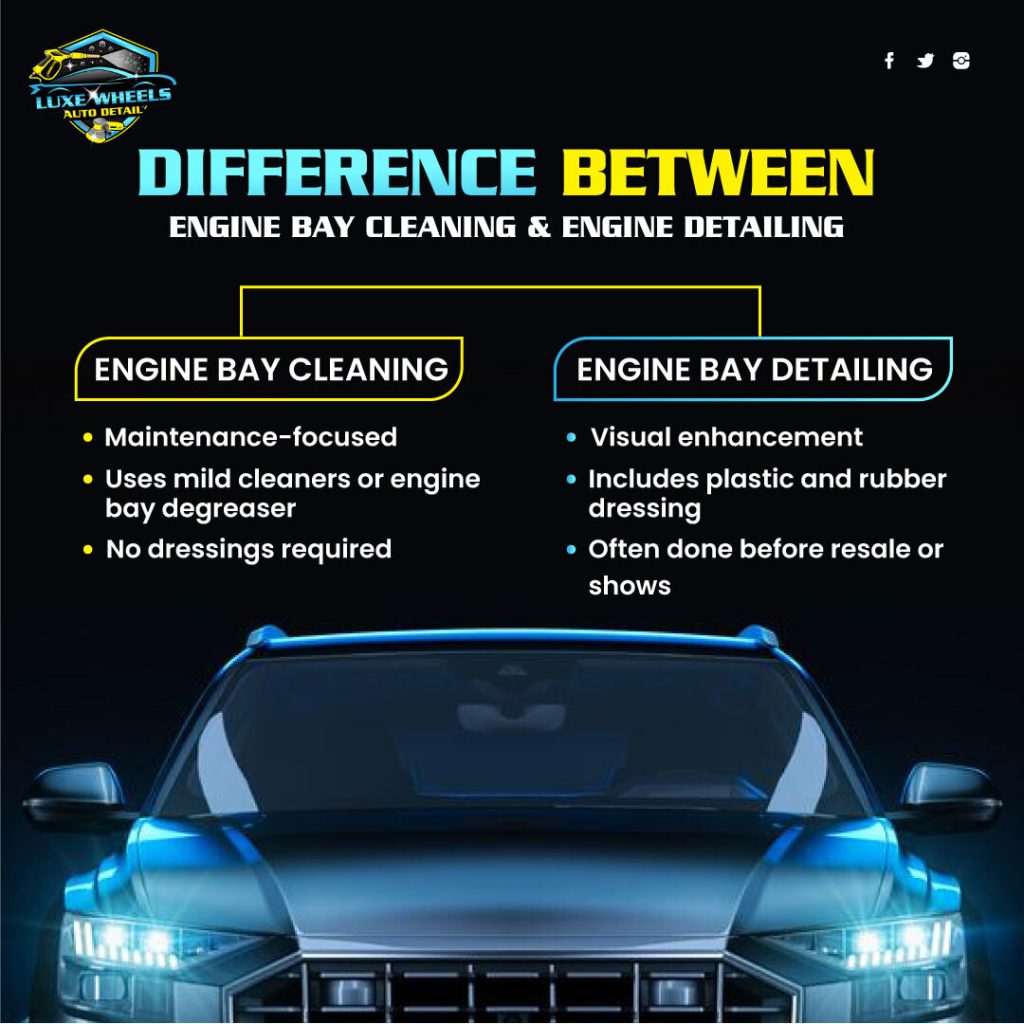
Difference between engine bay cleaning and engine detailing
Engine bay cleaning removes grime and oil for maintenance purposes.
Engine bay detailing focuses on cosmetic enhancement.
Engine bay cleaning
- Maintenance-focused
- Uses mild cleaners or engine bay degreaser
- No dressings required
Engine bay detailing
- Visual enhancement
- Includes plastic and rubber dressing
- Often done before resale or shows
Is Engine Bay Cleaning Safe for Modern Cars?
Yes, engine bay cleaning is safe for modern vehicles when done correctly.
Modern engines are sealed to handle rain, road spray, and humidity. Manufacturers design electrical connectors with weatherproof seals. Light washing engine bay with controlled water is not harmful.
Problems occur due to technique, not water itself.
- For added precaution, professionals often loosely cover exposed air filters, aftermarket intakes, ECUs, and alternators using plastic covers before cleaning.
Electrical components you must protect
Always protect:
- Alternator
- Fuse box
- Exposed sensors
- Aftermarket wiring
- Coil packs (on older vehicles)
Use plastic covers or aluminum foil secured loosely.

When engine bay cleaning is NOT recommended
Avoid engine bay cleaning if:
- The engine has exposed wiring damage
- You have a classic car with brittle insulation
- There are existing electrical faults
- The engine is hot
Benefits of Engine Bay Cleaning
- Improved engine performance and cooling
A clean engine bay improves heat dissipation by removing insulating grime, helping the engine run cooler, more efficiently, and reducing long-term thermal stress.
- Easier leak detection and maintenance
Clean engine surfaces make oil leaks, coolant seepage, worn hoses, and loose connections easier to detect, diagnose, and fix early.
- Better resale value and visual appeal
A spotless engine bay signals proper care, builds buyer confidence, enhances visual appeal, and positively influences resale value during inspections.
- Preventing corrosion and buildup
Removing road salt, oil residue, and dirt slows corrosion, prevents material degradation, and protects engine components from long-term damage.
Risks of Engine Bay Cleaning (And How to Avoid Them)
Engine bay cleaning has a reputation for causing electrical problems, but the reality is more nuanced. Most issues blamed on cleaning are actually caused by incorrect methods, not the act of cleaning itself.
Modern vehicles are designed to handle moisture. However, mistakes such as pressure washing, poor drying, or harsh chemicals can introduce avoidable risks.
Water damage to sensors and wiring
Sensors, connectors, and wiring looms are sealed but not designed to withstand high-pressure water. Problems occur when water is pushed past seals rather than lightly introduced and allowed to drain.
Using the wrong chemicals
Strong degreasers and household cleaners can damage plastics, rubber seals, and wire insulation. Over time, this leads to cracking, brittleness, and electrical faults.
High-pressure washing mistakes
Pressure washers increase the risk of alternator damage, connector corrosion, and delayed electrical issues. Many post-cleaning failures appear 24–72 hours later, once trapped moisture causes corrosion.
What actually causes engine problems after cleaning
Industry technicians point to the same root causes repeatedly:
- Pressure washing instead of controlled rinsing
- Cleaning a hot engine, causing thermal shock
- Skipping protective covers on exposed components
- Failing to dry connectors and crevices thoroughly
When engine bay cleaning is done with low pressure, automotive-safe cleaners, proper protection, and forced-air drying, the risk of electrical problems remains low.
How to Clean an Engine Bay Safely (Step-by-Step Guide)
Tools and supplies you’ll need
- Engine bay cleaner or engine bay degreaser
- Soft detailing brushes
- Microfiber towels
- Plastic bags or foil
- Low-pressure hose or spray bottle
- Compressed air or leaf blower
Preparing the engine bay before cleaning
- Park in shade
- Let the engine cool completely
- Disconnect battery if desired (optional)
How to cover sensitive components properly
Cover the alternator, fuse box, and exposed electronics loosely. Do not seal tightly.
Applying degreaser the right way
Spray the engine bay cleaner on dirty areas only. Let it dwell for 2–5 minutes. Do not let it dry.
Rinsing without damaging electronics
Use light water flow or spray bottles. Never blast water.
Drying and finishing touches
- Blow out standing water
- Wipe surfaces with microfiber
- Let engine air dry before starting
What NOT to Do When Cleaning an Engine Bay (Common Mistakes)
Pressure washer misuse
Never pressure wash an engine bay, as high pressure forces water into sensitive electrical components.
Cleaning a hot engine
Cleaning a hot engine causes rapid evaporation, component stress, and increases electrical shock risks.
Skipping protective covers
Uncovered alternators and fuse boxes often fail due to direct water and chemical exposure.
Overusing degreasers
Excess degreaser increases damage risk and does not improve cleaning effectiveness.
Engine Bay Cleaning Products: What Works Best?
Selecting an engine bay cleaner is not about buying the strongest product. It is about matching chemical behavior to contaminant type, material sensitivity, and risk tolerance. Most engine bay damage attributed to “cleaning” is actually caused by chemical mismatch, not water.
Understanding What You’re Actually Cleaning
Engine bay contamination generally falls into four categories:
- Dry particulate matter
Dust, pollen, sand, and road debris accumulate over time, reducing cleanliness and airflow efficiency. - Oil-based contamination
Engine oil mist, power steering fluid, and fuel residue create greasy buildup attracting more dirt. - Carbon and soot buildup
Common in diesel engines and older petrol vehicles, causing dark residue and increased component wear. - Salt and chemical residue
Winter road salt and coastal air deposits accelerate corrosion and long-term engine bay damage.
Each contaminant responds to different chemistry. Using the wrong cleaner forces people to compensate with pressure, which increases failure risk.
Cleaner Types Explained (From a Chemical Perspective)
pH-Neutral Engine Bay Cleaners
Best for: Routine cleaning, modern vehicles, beginners
pH-neutral cleaners rely on surfactants, not caustic reactions. These surfactants surround dirt particles and lift them away from surfaces without attacking plastics, rubber, or wiring insulation.
Why experts recommend them
- Minimal material degradation
- Low risk to seals and connectors
- Compatible with frequent maintenance
Limitations
- Not effective on heavy oil or grease without agitation
Water-Based Engine Bay Degreasers
Best for: Oil residue, moderate leaks, diesel engines
These use alkaline surfactants designed to emulsify oil molecules so they can be rinsed away. When diluted correctly, they are highly effective and still safe.
Expert rule
- Increase chemical strength, not water pressure
- Short dwell time is critical (2–5 minutes max)
Risk if misused
- Over-concentration dries rubber
- Long dwell times damage insulation
Foaming Engine Bay Cleaners
Best for: Modified vehicles, vertical surfaces, controlled cleaning
Foam changes how chemistry behaves. It slows runoff, increases dwell time, and reduces the need for scrubbing or spraying.
Why professionals use foam
- Better control near electronics
- Less water introduced overall
- Ideal for tight engine bays
Solvent-Based Cleaners (Expert-Only, Rare Use)
Best for: Industrial applications, extreme grease (rare in consumer vehicles)
Most professionals avoid solvent cleaners in engine bays unless absolutely necessary.
Why
- Solvents dissolve oils but also attack plastics
- High vapor risk
- No margin for error
For consumer vehicles, solvents introduce more risk than benefit.
Matching Cleaner to Vehicle Type (Professional Logic)
Modern daily drivers
- pH-neutral or mild water-based cleaner
- Designed materials tolerate light chemistry
- Focus on inspection, not deep degreasing
Older vehicles (10–15+ years)
- Highly diluted, water-based cleaners only
- Aging polymers lose chemical resistance
- Spot cleaning preferred over full saturation
Diesel engines
- Water-based degreasers required
- Soot and oil vapor bond strongly to surfaces
- Chemistry does the work, not pressure
Modified vehicles
- Foaming cleaners with minimal rinsing
- Exposed intakes and wiring raise risk
- Control > speed
Hybrid vehicles
- Electronics-safe, water-based cleaners only
- Avoid conductive residue
- No pressure, no soaking
Electric vehicles
- Traditional engine bay cleaners are inappropriate
- Dry or damp microfiber methods only
- Manufacturer guidance overrides detailing norms
Why Professionals Avoid “Household Solutions”
From an expert standpoint, household products fail because they are not material-tested for automotive polymers.
Examples:
- Dish soap strips protective oils
- Oven cleaners attack aluminum
- Brake cleaner embrittles plastics
- Degreasers not labeled “automotive safe” lack compatibility testing
Professionals rely on products tested against:
- EPDM rubber
- PVC wiring insulation
- Nylon connectors
- Polypropylene engine covers
Below is table to better understand what does with what
| Engine Bay Condition / Vehicle Type | Recommended Cleaner Type | Typical Dilution / Strength | Why This Is the Correct Choice | Expert Notes |
| Light dust, pollen, routine maintenance | pH-neutral engine bay cleaner or automotive shampoo | Ready-to-use or light dilution | Lifts particulate dirt without affecting plastics, rubber, or wiring insulation | Preferred for modern daily drivers and frequent maintenance |
| Moderate grime, road film | Water-based engine bay cleaner spray | Mild to medium dilution | Surfactants emulsify dirt while remaining material-safe | Avoid compensating with pressure |
| Oil mist, seepage, light leaks | Water-based engine bay degreaser (automotive-safe) | Medium dilution (per label) | Alkaline surfactants break down oil molecules effectively | Short dwell time is critical |
| Heavy grease & soot (diesel engines) | Strong water-based degreaser (used sparingly) | Strong dilution, targeted use | Diesel residue bonds tightly and needs chemical action | Never increase water pressure to offset weak chemistry |
| Older vehicles (10–15+ years) | Mild water-based cleaner, heavily diluted | High dilution ratio | Reduces stress on aged wiring insulation and seals | Spot cleaning preferred over full saturation |
| Modified vehicles (cold air intakes, exposed wiring) | Foaming engine bay cleaner | Light to medium strength | Foam controls runoff and limits water intrusion | Ideal near electronics and aftermarket parts |
| Hybrid vehicles | Electronics-safe, water-based cleaner | Very mild dilution | Minimizes conductivity and moisture risk near high-voltage components | Avoid pressure washing entirely |
| Electric vehicles (under-hood compartments) | Dry or damp microfiber + manufacturer-approved cleaner | No degreasers | Protects electronics, cooling modules, and housings | Follow OEM guidance strictly |
| Winter salt & coastal corrosion residue | Mild water-based cleaner + thorough rinse | Mild dilution | Removes salt deposits that accelerate corrosion | Focus on drainage and drying |
Expert Rule Set (Used in Workshops)
- If the dirt is light, use mild chemistry.
- If the dirt is heavy, use stronger chemistry, never stronger pressure.
- If you increase both, you increase failure probability.
Engine Bay Cleaning for Different Vehicles
Engine Bay Cleaning for Different Vehicles
Different vehicles require different engine bay cleaning approaches. Water pressure, cleaning products, and overall technique should always match the vehicle type to avoid unnecessary risk.
Cars vs trucks vs SUVs
Water pressure
- Passenger cars:
Use low pressure only (garden hose or wide-angle nozzle).
Ideal pressure range: under 1,000 PSI, or free-flowing hose water. - Trucks and SUVs:
Can tolerate slightly higher flow, but still low pressure.
If using a pressure washer, keep it below 1,200 PSI with a 40° nozzle, and maintain distance.
Cleaning products
- Mild engine bay cleaner or water-based engine bay degreaser
- pH-neutral automotive cleaners for plastics and rubber
Why this matters
Trucks and SUVs accumulate more mud, salt, and debris due to ride height and tire size, which often requires more cleaning power. However, higher pressure is still unnecessary and increases risk.
Avoid
- Direct spray toward fuse boxes or alternators
- Narrow spray tips
- Repeated spraying in one spot
Older vehicles vs modern vehicles
Water pressure
- Older vehicles (10–15+ years):
No pressure washer recommended
Use spray bottles, pump sprayers, or very light hose misting only. - Modern vehicles:
Can handle controlled low-pressure rinsing, but never concentrated spray.
Cleaning products
Older vehicles:
- Extremely mild, water-based cleaners
- Diluted engine bay cleaner
- Modern vehicles:
- Automotive engine bay cleaners
- Light engine bay degreasers for oily areas
Why this matters
Older wiring insulation, seals, and connectors become brittle with age. Even moderate water pressure can force moisture into areas that were never designed to be sealed.
Avoid
- Strong degreasers on old rubber and wiring
- Long dwell times
- Excessive water use
Diesel engines vs petrol engines
Water pressure
- Diesel engines:
Low pressure only, but slightly higher flow volume is acceptable for rinsing heavy grime. - Petrol engines:
Light rinse or spray bottle method is usually sufficient.
Cleaning products
- Diesel engines:
- Stronger but automotive-safe engine bay degreasers
- Allow short dwell time to break down grease and soot
- Petrol engines:
- Mild engine bay cleaner
- pH-neutral cleaners are usually enough
Why this matters
Diesel engines produce heavier oil vapor, soot, and grease buildup. They require better chemical cleaning rather than increased water pressure.
Avoid
- Using pressure to compensate for poor chemical choice
- Letting degreasers dry on surfaces
Hybrid and electric vehicle considerations
Water pressure
- Hybrid vehicles:
Use minimal water only. Prefer spray bottles or pump sprayers.
Absolutely no pressure washing. - Electric vehicles:
Do not clean using traditional engine bay methods.
Cleaning products
- Hybrid vehicles:
- Very mild, water-based cleaners
- Spot cleaning only
- Electric vehicles:
- Dry cleaning methods
- Manufacturer-approved interior or electronics-safe cleaners
Why this matters
Hybrids contain high-voltage components that are not tolerant of moisture intrusion. Electric vehicles do not have traditional engines and house sensitive electronics under the hood.
Avoid
- Any pressurized water
- Spraying near orange high-voltage cables
- Degreasers not approved by the manufacturer
Professional Rule of Thumb
- If stronger chemicals are needed, reduce water pressure.
- If more water is needed, reduce chemical strength.
- Never increase both at the same time.
DIY Engine Bay Cleaning vs Professional Service
Cost comparison
DIY: Low cost
Professional: Higher cost but safer for beginners
Time and effort involved
DIY takes 45–90 minutes. Professionals finish faster.
Risk level for beginners
Beginners face higher risk without guidance.
When professional engine bay detailing is worth it
- High-value or performance vehicles
Tightly packed engine bays and expensive components leave little room for error. - Classic or older vehicles
Aging wiring, seals, and rare parts make professional handling safer. - Daily drivers with heavy grime or leaks
Oil buildup, road salt, or long-neglected engine bays benefit from expert cleaning. - Vehicles being sold or inspected
A professionally cleaned engine bay improves presentation without over-cleaning. - Modified vehicles
Aftermarket intakes, exposed wiring, or custom setups increase risk during DIY cleaning. - Owners who want minimal risk or time investment
Professional service removes guesswork and saves time regardless of vehicle type.
How Often Should You Clean Your Engine Bay?
| Vehicle / Usage Type | Recommended Frequency | Why This Schedule Works |
| Daily drivers (city & highway) | Every 6–12 months | Prevents gradual grime buildup, helps spot small leaks early, and supports efficient heat dissipation. |
| Off-road, work vehicles, trucks & SUVs | Every 3–6 months | Removes mud, dust, and debris that trap moisture and accelerate corrosion. |
| Winter or coastal climate vehicles | After winter or every 3–4 months | Road salt and moisture are highly corrosive and should be removed before long-term damage occurs. |
| Performance & enthusiast vehicles | Once per year or before inspection | Keeps heat-sensitive components clean and maintains a clear maintenance baseline. |
| Older vehicles (10–15+ years) | As needed only | Aging wiring and seals increase risk; clean only when buildup or leaks are present. |
| Before selling or major service | One-time cleaning | Improves buyer perception and makes leaks or issues easier to identify. |
Quick rule of thumb
- Clean by condition, not habit.
Visible grime, oil smells, or trapped debris matter more than the calendar.
Engine Bay Cleaning Myths You Should Stop Believing
“Water will ruin your engine”
Incorrect. Poor technique causes damage.
“Only professionals should do it”
DIY is safe with proper steps.
“New cars don’t need engine bay cleaning”
New cars still accumulate grime and salt.
Expert Tips for Long-Lasting Engine Bay Cleanliness
How mechanics keep engine bays clean
They wipe spills immediately and avoid heavy buildup.
Preventive habits to reduce buildup
- Fix leaks early
- Avoid overfilling oil
- Rinse lightly during washes
Real-world mistakes seen by professionals
Most damage comes from pressure washers and harsh chemicals.
Signs your engine bay needs attention now
- Strong oil smell
- Visible buildup
- Poor cooling performance
Engine Bay Cleaning Before Selling or Inspection
How clean engine bays affect buyer perception
Clean engine bays signal proper care, responsible ownership, and consistent maintenance to potential buyers.
What inspectors actually look for
Inspectors check for leaks, corrosion, damaged wiring, loose connections, and signs of neglected maintenance.
Avoiding over-cleaning red flags
Overly shiny engine bays may raise suspicion of hidden leaks or recent cosmetic masking.
Environmental & Safety Considerations
Safe disposal of runoff and chemicals
Avoid storm drains by using absorbent mats to collect and properly dispose of contaminated runoff safely.
Eco-friendly engine bay cleaning options
Choose biodegradable, non-toxic cleaners that protect components and reduce environmental impact.
Local regulations and driveway cleaning risks
Some areas restrict driveway washing due to runoff pollution and local environmental regulations.
Frequently Asked Questions About Engine Bay Cleaning (FAQ)
Yes, if water enters sensors or connectors. Most issues appear 24–72 hours later due to trapped moisture rather than immediate failure.
No. This is the most common mistake. High pressure can force water past seals and into electrical connectors.
Yes, when protected properly. Covering exposed components and using low-pressure water keeps risk minimal.
45 to 90 minutes for DIY. Professionals may complete it faster due to specialized tools and experience.
Indirectly, by improving cooling and maintenance visibility. It helps identify leaks and heat-related issues earlier.
Yes, with the right tools and method. Controlled rinsing, automotive-safe cleaners, and proper drying are essential.
Yes, as part of preventive maintenance. Periodic cleaning helps prevent corrosion and long-term buildup.
Yes, light water exposure is normal. Modern engine bays are designed to handle rain and road spray.
Yes, using low pressure only. Keep water moving and avoid focusing on one area for too long.
No. Never recommended. Pressure washing significantly increases the risk of electrical and alternator damage.
Conclusion: Is Engine Bay Cleaning Worth It?
Engine bay cleaning is safe, beneficial, and worthwhile when done correctly. It improves maintenance visibility, prevents corrosion, and boosts resale confidence. The key is using the best way to clean an engine bay, not shortcuts.
If you are unsure, a professional service eliminates risk. If you DIY, follow controlled steps and avoid pressure washing. A clean engine bay is not just about looks. It is about long-term vehicle health and informed ownership.
Need professional engine bay cleaning or detailing?
Contact Luxe Wheels Auto Detail a trusted auto detailing service to protect your vehicle and get it done right the first time.